ASL Xingu Project Launched at COP30 with Focus on Conservation, Social Inclusion, and Sustainable Development
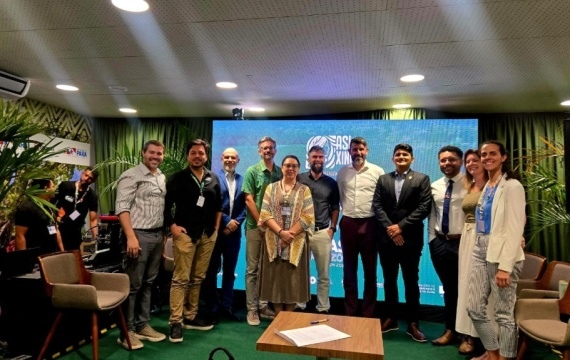
On Friday (14), during COP30, the Ministry of Environment and Climate Change (MMA) and Fundação Getulio Vargas (FGV) launched the ASL Xingu Project: Integrating Forests, Peoples, and Waters – Socio-environmental Conservation and Sustainable Development in the Xingu. The event took place at the Pará Pavilion in the Green Zone and marks the beginning of the third phase of the Amazon Sustainable Landscapes Project (ASL Brazil).
With an investment of around R$45 million and a four-year duration (2026–2030), the initiative will operate in ten municipalities and thirteen areas of the Lower and Middle Xingu in Pará, strengthening biodiversity conservation, territorial governance, the socio-bioeconomy, and integration among federal, state, and municipal public policies. In total, the project will cover an area of more than 4.3 million hectares of forests, rivers, and traditional and rural territories.
The event also celebrated the signing of the ASL Xingu Project Grant Agreement between FGV and the World Bank—a key milestone to enable the implementation of this new phase of the Amazon Sustainable Landscapes Project (ASL Brazil).
The Grant Agreement formalizes the partnership between FGV and the World Bank for the execution of the ASL Xingu Project, establishing the scope of activities, responsibilities of each party, disbursement rules, and environmental, social, and fiduciary standards that will guide the entire implementation. Marcus Mendes, Project Manager for Monitoring and Evaluation of the ASL Project at FGV, emphasized: “This instrument consolidates FGV’s role as the implementing agency and ensures the project’s start, enabling the signing of cooperation agreements with Operational Units and the planning stage for actions in the territory.”
Representing MMA, Carlos Eduardo Marinelli, Chief of Staff and Acting Secretary of the National Secretariat for Biodiversity, Forests, and Animal Rights (SBIO), and supervisor of the ASL Brazil Project, highlighted that ASL Xingu was created to strengthen local institutions, social and community organizations in the region, and citizen participation in municipal policies. “ASL Xingu was born to empower those who live in and care for the territory, integrating policies and knowledge to build a lasting legacy. We want to create processes that remain in the territory, together with the people,” he stated.
Cleyton Amin, Coordinator of Sustainable Rural Development and Environmental Incentives at the Climate Change and Environmental Services Directorate (DIMUC) of the State Secretariat for Environment, Climate, and Sustainability of Pará (SEMAS/PA), noted that previous ASL phases were decisive in strengthening the state’s environmental management. “The project supported territorial planning, environmental regularization, and the structuring of secretariats. The new phase will allow us to advance even further. Pará has structural policies such as the State Native Vegetation Recovery Plan and an ambitious goal to restore 5.65 million hectares, while the national target is approximately 12 million. ASL is very welcome,” he said.
Elivelton Carvalho, Director of Management and Monitoring of Conservation Units (UCs) at the Institute for Forest Development and Biodiversity of Pará (IDEFLOR-Bio), stressed that ASL Brazil has been essential for strengthening the management of Pará’s Conservation Units, enabling the implementation of management plans, advancing forest concessions, and expanding turtle monitoring actions—results that add to the 21 million hectares under state management. “Through ASL, we secured the resources needed to structure these essential documents. We also carried out the forest concession of 200,000 hectares in the Iriri State Forest, a milestone for sustainable management in the region,” he explained.
According to Henrique Santiago, Technical Coordinator of the ASL Brazil Project, previous investments in the region include more than 500 hectares of agroforestry systems in the Triunfo do Xingu Environmental Protection Area (APA), whose production is already increasing the income of family farmers.
From a regional perspective, Erwin De Nys, Manager for Environment and Social Development in Latin America and the Caribbean at the World Bank, highlighted that between 2017 and 2024, ASL Brazil supported the creation of 23 new protected areas (4.3 million hectares), strengthened the management of 62 million hectares of existing units, is restoring 1,600 hectares of forests, and supported the collection of 45 tons of native seeds. According to him, ASL Xingu reinforces this legacy and becomes a key component of the Amazonia Viva initiative. “The results of ASL Brazil are very important. Xingu is now a key element of our Amazonia Viva initiative, focusing on jobs, resilience, and measurable outcomes,” he concluded.
About the Project
The ASL Xingu Project: Integrating Forests, Peoples, and Waters is coordinated by the National Secretariat for Biodiversity, Forests, and Animal Rights of the Ministry of Environment and Climate Change (SBIO/MMA) and implemented by Fundação Getulio Vargas (FGV Europe), in partnership with the State Secretariat for Environment and Sustainability of Pará (SEMAS/PA), the Institute for Forest Development and Biodiversity of Pará (IDEFLOR-Bio), the Chico Mendes Institute for Biodiversity Conservation (ICMBio), the Brazilian Forest Service (SFB), and ten municipalities in Pará: Gurupá, Altamira, Senador José Porfírio, São Félix do Xingu, Porto de Moz, Abaetetuba, Melgaço, Itaituba, Portel, and Prainha.
ASL Xingu is part of the Regional ASL Program (Amazon Sustainable Landscapes), implemented by the World Bank and funded by the Global Environment Facility (GEF), which brings together Amazonian countries for integrated landscape management.