Academic Contributions to Building Resilient Cities Highlighted at the “Just Transition Pavilion” during COP30
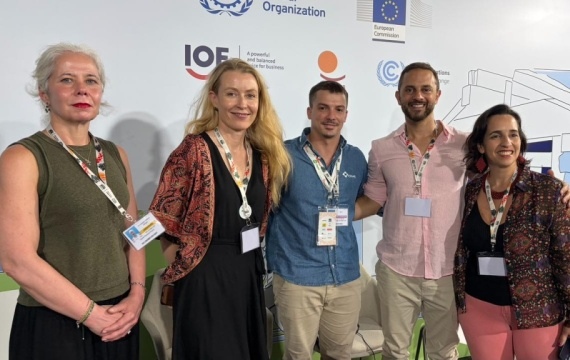
Goret Paulo, Director of Research and Innovation at Fundação Getulio Vargas (FGV), participated in the panel “Urban Heat & Vulnerability: Advancing Climate Justice Through Inclusive and Resilient Adaptation” on November 14. The meeting brought together experts and decision-makers to debate concrete solutions that integrate public policies, finance, and insurance in building more resilient cities in the face of increasing frequency and intensity of extreme climate events.
The session addressed how metropolises such as Rio de Janeiro and Helsinki can contribute to the global climate agenda by promoting inclusive adaptations based on sustainable urban planning, early warning systems, resilient infrastructure, and practices such as water reuse and circular economy - ensuring that the benefits of evidence-based climate policies reach the entire population.
Among the panel highlights, Goret Paulo emphasized the importance of collaboration between academia and local governments from the early stages of research to generate real impact:
“Academia must connect with cities from the outset of research project development so that public managers help define research questions and validate potential solutions. Only then can we develop contributions that bring concrete benefits to society,” she stated.
Goret also introduced the concept of Societal Readiness Level (SRL), which measures the level of research development and its capacity to generate innovative products or services ready to be used to improve societal well-being.
The director warned about the growing severity of climate events. According to her, this reality requires not only resilient infrastructure but also the ability to collect, process, and analyze data for prevention and mitigation of disaster impacts:
“Resilient infrastructure and efficient data use are essential to reduce costs from natural disasters, protect lives, ensure water and energy security, and improve urban quality of life,” Goret explained.
She also noted that technological advances have already reduced costs and increased data storage and processing capacity, but these resources remain underutilized by governments.
“Adopting technological solutions can improve the quality of public services without increasing expenses,” she stressed.
Goret further highlighted recommendations for developing social housing models, including the use of digital platforms connecting property owners and potential tenants, supported by fintechs for rental guarantee insurance and transparent management; initiatives for sustainable mobility, expanding public transportation combined with app-based transport for the “last mile”; fleet electrification to reduce emissions and enhance user experience; and innovative parametric insurance models based on blended finance, combining private, public, and philanthropic investors to enable protection against extreme events and support municipalities in climate adaptation.
In addition to Goret Paulo, the panel featured: Hanna Wesslin, Climate Director for the City of Helsinki; Thiago Medaglia, journalist, writer, and founder of Ambiental Media; Pedro Werneck, Sustainability Manager at the National Confederation of Insurers (CNseg); and Vitalson Exantus, President and Head of Mission at the Organization of Democrats for Integration and Development (ODID). The session was moderated by Flora Pereira, Executive Director of Impact at the Pulitzer Center.
Comprehensive coverage of Fundação Getulio Vargas researchers’ participation in COP30—including agendas, exclusive content, and contributions to global climate action—is available on the Agenda do Clima FGV Platform. The opinions expressed in this publication are solely those of the collaborating researchers and do not necessarily reflect the official position of FGV.